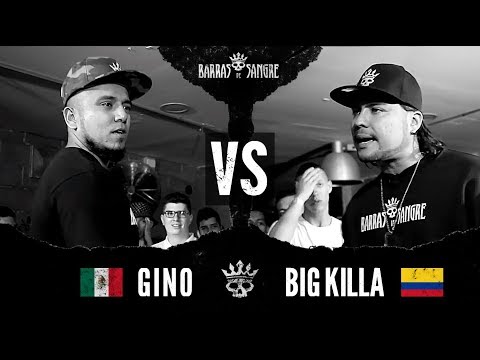
AvelDomainvsBig Killa
Votes
Be the first member to on this battle!
Community Verdict
Big Killa controlled all three rounds through superior punchline density, commanding vocal projection, and targeted research into AvelDomain's battle resume and crew affiliations. Entering from a freestyle background, the Medellín representative showed polished mastery of the written a cappella format, systematically neutralizing AvelDomain's conversational humor while hijacking his opponent's round-ending catchphrase after every verse. Although AvelDomain landed sharp cartel wordplay in the second round and a resonant defense of uncensored battle rap in the third, Big Killa's sustained haymakers made the outcome unmistakable, even prompting AvelDomain to sportingly concede onstage before the final stanza.
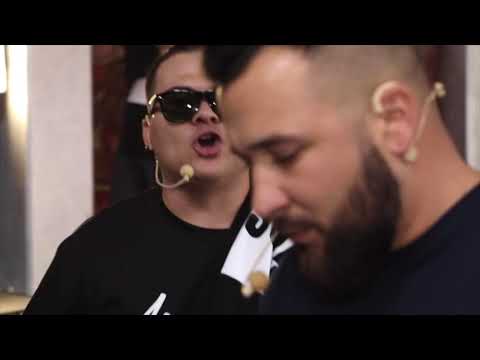
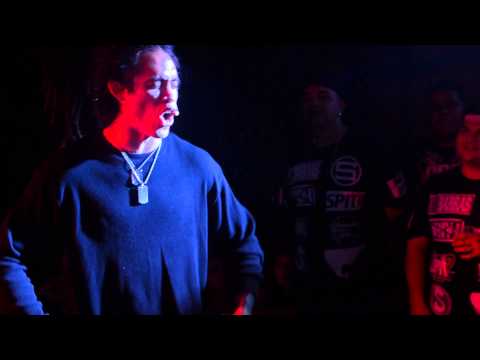
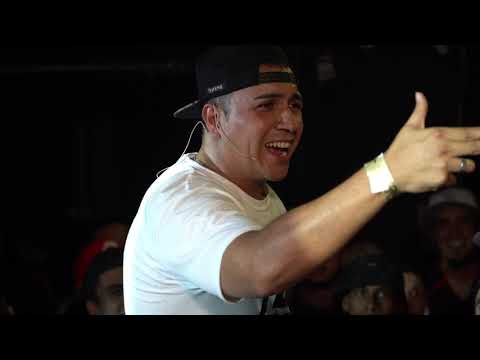
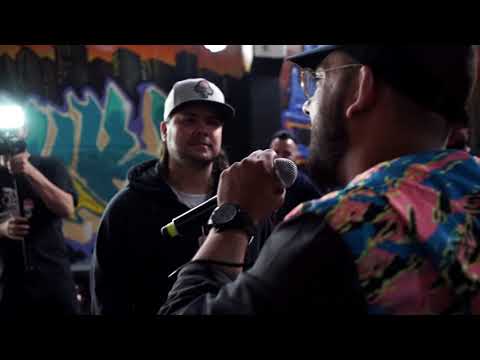
Staged in Tijuana for the second edition of Barras De Sangre, the cross-border matchup between Los Angeles veteran AvelDomain and Medellín representative Big Killa paired contrasting schools of battle rap. Known for laid-back Chicano charisma, dark street humor, and his affiliation with the Hermanos Mata collective, AvelDomain entered as a battle-tested written-format regular. Across from him stood Big Killa, an accomplished Colombian freestyler determined to prove his adaptability to written a cappella competition after drawing mixed reactions in earlier outings against Gino and Lobo Estepario.
From the opening bars of the first round, Big Killa erased any doubts regarding his preparation. Rejecting AvelDomain's conversational comedy with stern vocal projection and tight multi-syllabic setups, Big Killa dismantled the Hermanos Mata and Velorio banners, addressed his past Lobo Estepario controversy head-on, wove in a pointed third-party strike at analyst Ráfagas Dan ('Terror Audiovisual'), and commandeered AvelDomain's watch-in-the-cup slogan at the end of each verse. Big Killa widened the margin in the second round by auditing AvelDomain's resume across Secretos de Sócrates and Never Die before shaking the room with a 'Willy Wonka' haymaker. Still, AvelDomain contributed memorable highlights to the contest, landing crisp cartel wordplay with his 'El Limón' and 'a Medellín contra Cali no le fue muy bien' lines before dedicating his third round to an earnest defense of uncensored 1980s battle culture anchored by his 'pistola de mentira' metaphor.
The defining image of the clash arrived immediately after AvelDomain's final slogan, when the California emcee smiled and conceded the contest to Big Killa ('Dale wey, te la llevaste') before the Colombian even delivered a relentless third verse calling out Zárate and Trino. Viewers across Latin America echoed that onstage verdict, celebrating the performance as Big Killa's definitive breakthrough in the written circuit while commending AvelDomain's sportsmanship and principled closing round.
- Viewers overwhelmingly praised Big Killa's rapid growth in the written a cappella format, noting major strides in structure, composure, and punchline weight compared to his previous written appearances.
- Community consensus awarded a clear victory to Big Killa and sparked widespread demand to see the Colombian contender booked on premier Mexican written cards such as SPIT MX and Línea 16 against names like Trino, Mecal, or Aczino.
- Fans applauded AvelDomain's class and sportsmanship at the end of his third verse, highlighting his candid onstage salute to Big Killa as a reflection of genuine hip-hop respect.
- Despite the one-sided scoreboard, audiences singled out AvelDomain's third-round message against censorship and his 'Medellín contra Cali' bar as memorable contributions, alongside Big Killa's coded bars aimed at 'Terror Audiovisual'.
- Critics observed that AvelDomain relied too heavily on casual jokes and loosely connected street imagery during the first two rounds, leaving him underpowered against a focused, angle-driven opponent.
- Several attentive listeners noted that Big Killa leaned repeatedly on the same phonetic re-framing device across multiple rounds rather than diversifying his transitional setups.
- A small segment of written-battle purists argued that Big Killa's cadence and punchline phrasing still carried noticeable freestyle habits that trailed top-tier written specialists, while questioning whether the live crowd favored humor over layered wordplay.
- Viewers unfamiliar with Mexican battle rap YouTube commentary expressed confusion over Big Killa's extended first-round bars targeting an outside content creator instead of focusing exclusively on AvelDomain.
Discussions
No Discussions Yet
Be the first to start a breakdown thread, share your round scores, or drop your take on this battle.