Votes
Be the first member to on this battle!
Community Verdict
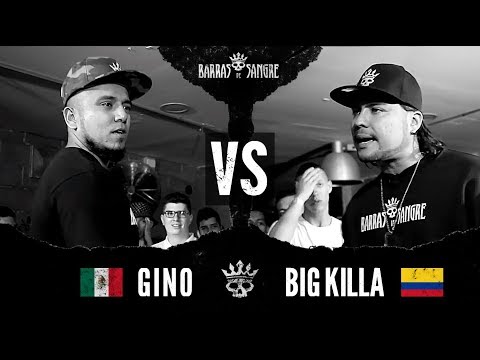
Gravedad secured a clear victory at Spit Mexico's Tiempos de Guerra III through overwhelming stage command, razor-sharp punchlines, and masterfully paced angles that kept the Mexico City room in his palm across three extended rounds. Returning from a year-long hiatus, the Aguascalientes veteran blended dark humor, cultural critiques, and haymakers on Colombian-Mexican rivalries with a resonant third-round reflection on battle rap's commercialization. Big Killa delivered a highly technical performance anchored by crisp cadence and layered conceptual runs—most notably a first-round photography metaphor and a second-round weave of Gravedad's 'Código de Barras' tracklist—but muted live crowd reactions and Gravedad's sheer volume of room-shaking moments tilted every stanza toward the local favorite.
Returning from a year-long absence at Spit Mexico's Tiempos de Guerra III, Aguascalientes veteran Gravedad met Colombian technician Big Killa in a stylistic contrast between theatrical room command and compact, multi-layered penmanship. Across forty-one minutes, Gravedad leveraged veteran timing, dark self-awareness, and booming projection to control the Mexico City venue, stretching his turns into sprawling eight-to-eleven-minute monologues packed with hard-hitting punchlines and biting humor. From his first-round Olmec and Aztec wordplay to the explosive 'Amado Carrillo' haymaker and his surgical 'Notorious B.I.G.' name-flip in the second, Gravedad repeatedly forced pauses as the crowd erupted—even drawing visible nods from Aczino in the audience when deconstructing modern freestyle formulas and challenging Muelas de Gallo.
Despite operating in hostile territory before a subdued crowd, Big Killa proved why Spit Mexico booked him against a marquee Mexican writer, maintaining crisp diction, steady cadence, and admirable sportsmanship while applauding his opponent's best lines. Rather than matching Gravedad's extended runtime, the Medellín representative delivered tight three-minute rounds loaded with conceptual craftsmanship that shone brightest on replay. His first-round photography sequence—seamlessly connecting shutter bursts, aperture, white balance, and ISO levels—and his second-round weave of song titles from Gravedad's 'Código de Barras' LP stood out as two of the sharpest technical exercises of the event, complemented by a clever 'radioterapia' metaphor and a pointed jab about accepting the matchup just to watch Aczino face Eptos Uno.
What elevated the contest into an enduring piece of Mexican battle rap history was Gravedad's closing third-round turn, where he pivoted past conventional insults to critique the commercialization of the scene, tabloid-style beefs, and industry 'malinchismo' toward domestic talent. While online debate noted the lopsided round lengths and argued the live audience slept on Big Killa's dense wordplay, community consensus firmly backed Gravedad's victory—most commonly as a competitive 3-0 sweep built on superior impact and stage presence. Following Gravedad's subsequent passing, the bout has taken on deeper resonance for Spanish-language hip-hop fans, celebrated both as a showcase for Big Killa's lyrical precision and as a defining performance from one of Mexico's most respected written-format pioneers.
- Viewers widely praised Gravedad's commanding stage presence, comedic timing, and candid third-round critique of battle rap politics, with retrospective comments honoring the performance as a cornerstone of his late legacy.
- Fans consistently commended Big Killa's layered writing—especially his first-round photography metaphor and second-round 'Código de Barras' album-title sequence—noting that his dense wordplay rewards repeat viewings.
- Community discussion highlighted Big Killa's poise and sportsmanship on stage, applauding the Colombian MC for genuinely celebrating Gravedad's sharpest punchlines throughout the matchup.
- Gravedad's direct callout of Muelas de Gallo alongside Aczino's animated reactions in the venue fueled strong fan demand for future headlining clashes against Mexico's top-tier veterans.
- Many viewers faulted the Mexico City audience for remaining largely unresponsive during Big Killa's rounds, observing that high-level wordplay went unacknowledged live due to local bias and rapid-fire delivery.
- A vocal segment of commenters questioned the uneven round lengths, pointing out that Gravedad's eight-to-eleven-minute turns disrupted pacing symmetry compared to Big Killa's concise three-minute verses.
- Some purists argued that Gravedad leaned heavily on stand-up comedy and physical roasts over compact rhyme structures, while others noted Big Killa needed slightly more vocal emphasis at the end of punchlines to land harder live.
- Viewers following the broader Tiempos de Guerra III event noted repetitive pop-culture angles across the card, specifically pointing to the frequent appearance of 'Hellboy' references in multiple battles.
Discussions
No Discussions Yet
Be the first to start a breakdown thread, share your round scores, or drop your take on this battle.